Why plant natives?
What the native garden trend is missing.

My mentor spent her career fighting for something that has finally become a trend - growing natives at home. When something becomes a trend, it becomes accepted and celebrated by the general public. The unfortunate reality about trends is that this acceptance and celebration doesn’t always come from a grounded understanding of the thing is that has become popular. Often times, it comes from wanting to follow the trend.
Some people are choosing native plants to attract more pollinators to their gardens, since natives often provide abundant flowers and habitat.
Some people are choosing natives plants to save money on watering a lawn.
Some people are choosing towards natives because the New York Times has recently proclaimed that a native garden will increase your property value.
What is falling through the cracks is that native plants reflect thousands of years of ecological and cultural evolution as plant communities. When people are choosing natives for financial savings or aesthetics, they fail to see the deeper intelligence of these plants systems. In a time when land resilience is of utmost importance, understanding these systems is of utmost importance, too.
Native plants teach us that we are stronger in community. A single native plant may survive on its own, but it will not thrive in the same way it would alongside the native trees, shrubs, flowers, grasses, fungi, insects, birds, animals, and people it co-evolved with.
In North America, Indigenous peoples understood and stewarded these relationships long before native plants became a modern trend. They knew that keeping plant communities intact could help store water due to their deep root systems, sustain symbiotic relationships, feed life above and below ground, and build resilience in the face of wildfire, drought, floods, and other disturbances.
The good news is that we can all follow the trend to become stewards of land and climate restoration. We can do this by furthering our education on the subject matter. Furthering our education on native plant communities will enhance our brains, yards, and planet.
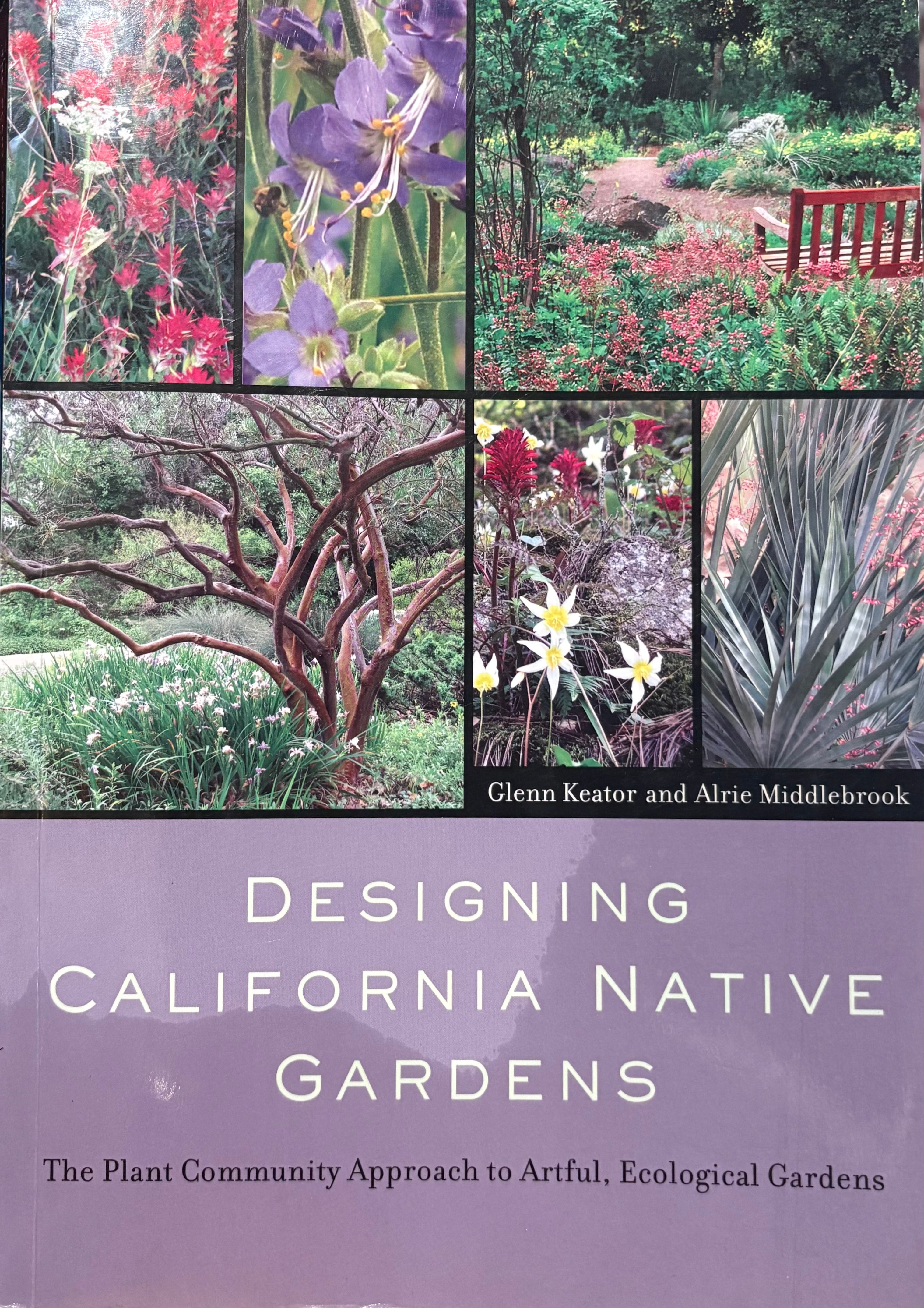
Reading is a great place to start. You can order a copy of my mentor, Alrie Middlebrook and Glenn Keator’s book: "Designing California Native Gardens: The Plant Community Approach" , Same book, different link to dive into twelve major plant communities, with photos, hike recommendations where you would find them, plant recommendations, and garden design examples and tips for each plant community.
Other resources:
Brief history of native plants
Contact Us for Native Garden Design Services (Bay Area only)